Woven and Nonwoven Fabric: 20 Key Differences Explained
Introduction
Fabric is used almost every part of our daily life. For example, clothing and home textiles to medical products, automotive interiors, and industrial materials. This article will explain differences between woven and nonwoven fabrics. Woven and nonwoven fabrics are two major fabric categories. However, their manufacturing processes differ. Moreover, Not only the manufacturing process but also their lots of differences between woven and nonwoven fabric. But this article will discuss only 20 key differences between woven and nonwoven fabric. This article will help textile students, buyers, quality professionals as well as manufacturers select the right materials for a specific application. However, before going to the main point, let’s come to learn the basic classification of fabric.
Basic Classification of Fabrics
Fabric can be classified in many ways. For example; based on their construction, and manufacturing process. But commonly fabric may classified into three groups:
- Woven fabrics
- Knitted fabrics
- Nonwoven fabrics
Simply, woven fabrics are produced by interlacing two sets of yarns (one set is warp and other is weft). Knitted fabrics are made by forming loops of yarn. On the contrary, nonwoven fabrics are manufactured without the traditional process of weaving or knitting. Nonwoven fabrics are produced from fibers by webbing and bonding methods. However, we don’t discuses knitting process in this article. Our focusing point is woven and nonwoven fabric.
What is woven fabric?
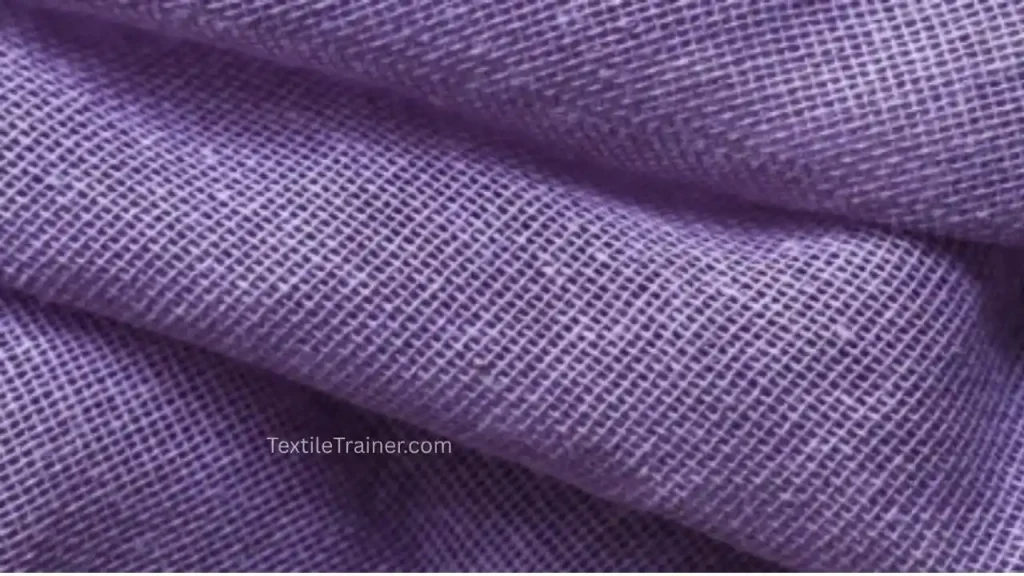
Woven fabric is manufactured by interlacing warp and weft of yarns at right angles each other. Additionally, the warp running along the length of the fabric is called the warp or ends. On the other hand, the yarn running across the width is called wefts or filling or picks. The three basic weave structures are:
- Plain weave
- Twill weave
- Satin weave
Use of woven fabric: cotton shirts, denim fabric, jeans, bed sheets, formal trousers, ladies dress, and many industrial fabrics.
What is nonwoven fabric?
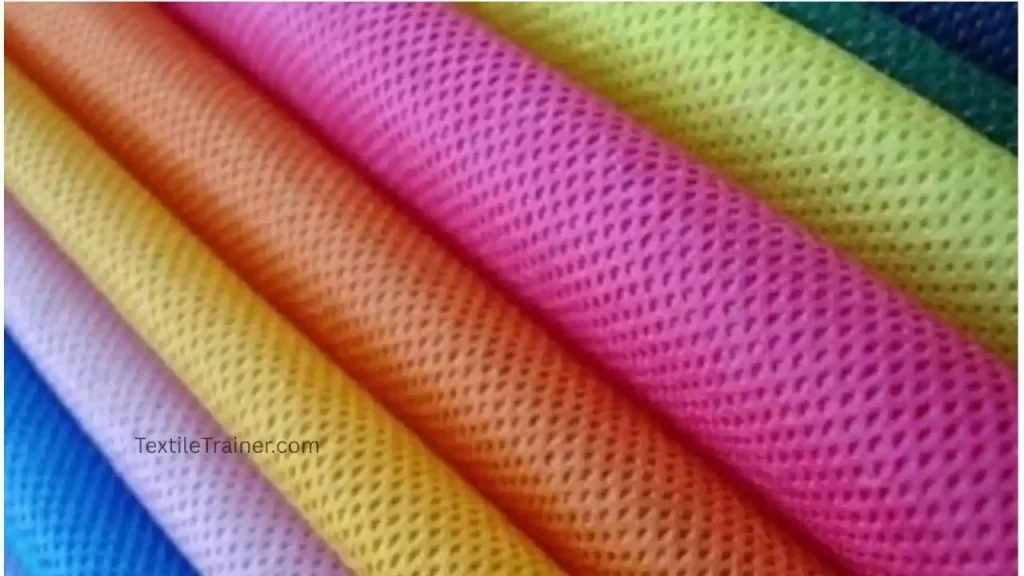
Nonwoven fabrics are produced from fibers that are formed into a web and bonded together. Additionally, Nonwoven fabric does not require the traditional interlacing of warp and weft yarns like woven fabric. Common nonwoven fabric manufacturing methods include:
- Mechanical bonding
- Thermal bonding
- Chemical bonding
- Spunbond and meltblown process
Use of nonwoven fabric: Medical masks, surgical gowns, wipes, disposable diapers, filtration materials, geotextiles, some types of packing materials, and industrial applications.
Key differences between woven and nonwoven fabric
Woven vs nonwoven fabric differences are given below:
| S/N | Woven | Nonwoven |
| 1. | Woven fabrics are manufactured through the interlacing of two set of yarn (warp and weft) at right angle using loom. | On the contrary, nonwoven fabrics are produced from fiber through bonding or felting fibers using specialized equipment and process. |
| 2. | The main raw material is yarn. | on the other hand, the main raw material is fiber. |
| 3. | In woven fabric manufacturing process requires a loom, skilled weavers, and specific design. | In contrast, nonwoven fabric manufacturing process does not require loom. But require specific method for bonding or felting fibers together using heat, chemicals, or mechanical process. |
| 4. | Another key differences, woven fabric typically produced at comparatively slower process. Because, weaving process requires careful attention. | On the other hand, nonwoven fabrics can be produced at a faster speed. Because, the nonwoven manufacturing process allows for continuous and automated production. |
| 5. | The cost of woven fabric is higher. | the cost of nonwoven fabric is lower (typically 40-70% cheaper per m2) |
| 6. | Tensile strength is higher, directional along warp and weft. | The tensile strength is moderate, more isotropic. |
| 7. | Filtration properties of woven fabric is poor without treatment. | Filtration properties of nonwoven fabric is excellent. |
| 8. | GSM range 80-400 | On the contrary, GSM range 10-200 |
| 9. | It can be repeated laundering and reuse. | Generally, it is produced for single time use or limited use. |
| 10. | Drape of woven fabric is excellent | But the drape nonwoven fabric is stiffer like paper. |
| 11. | Breathability is good. But it is determined by weave density. | Breathability is comparatively lower. |
| 13. | It can fray when it cut. | Many types of nonwoven fabric do not fray. |
| 14. | It has a regular yarn structure and the appearance of the surface is smooth. | It has uniform fiber appearance and rough. |
| 15. | Production time is high. Because, it requires yarn preparation than weaving. | Production time is low then woven fabric. Because, fiber web can be converted directly into fiber. |
| 16. | Eco-impact is higher. Because, woven production process need higher amount water energy. | Eco-impact is lower and lower production footprint. |
| 17. | Water resistance is depended on fabric structure. | Generally, it is naturally hydrophobic. |
| 18. | The moisture absorption of woven fabric varies on the fiber materials. To cited an example, cotton and linen have strong moisture absorption, while polyester is weak. | Generally, nonwoven fabric have relatively weak moisture absorption. But some personal care products like wet wipes often use hydrophilic fibers to enrich absorbency. |
| 19. | Softness is low, but it depends on fiber. For example, silk woven fabrics are very soft, while cotton is relatively rough. | Softness is high, especially the spunlace nonwoven fabric which is suitable for direct contract with skin. |
| 20. | Use of woven fabric: clothing (shirts, trousers, jackets); home textiles (curtains, bedsheets, tablecloths, towels); industrial setting (protective gear, canvas, seat belts, filtration membranes); Medical application (lab coats, surgical drapes, gowns) | Use of nonwoven fabric: Healthcare and hygiene (masks, gowns, sanitary products); personal care items ( wipes, diapers, sanitary towels, cosmetic pads); agriculture ( plant cover, seeding bags, soil stabliizers); aerospace sector ( insulation materials, protective clothing) ; air and liquid filtration ( air filter, liquid filtration membrane); packaging ( shopping bags, gift bags) |
Conclusion
Though, woven and nonwoven fabrics belong to different fabric structures. But they are both crucial in our daily life. However, these differences between woven and nonwoven fabrics help textile professionals. If you have any questions about woven and nonwoven fabrics, let me know in the comment box.
References
- T. Harter, H. Steiner, and U. Hirn, “Investigating mechanisms deteriorating the dispersibility of biodegradable and flushable wet wipes,” Cellulose, vol. 29, no. 16, pp. 8827–8842, 2022, doi: 10.1007/s10570-022-04816-yR. R.
- T. karthik, Probha karon c., Non-woven-process, structure, properties and applicaton. Woodhead Publishing Inida Pvt Ltd, 2016.
- M. A. Hubbe and A. A. Koukoulas, “Wet-laid nonwovens manufacture – Chemical approaches using synthetic and cellulosic fibers,” BioResources, vol. 11, no. 2, pp. 5500–5552, 2016, doi: 10.15376/biores.11.2.Hubbe.