Air Permeability Testing Standards for Textile Materials
Introduction
Choosing the most suitable method for air permeability testing is crucial for reliable textile results. This article will brief and compare ISO 9237, ASTM D737, ISO 9073-15, GB/T 5453, JIS L1096, and other testing methods. From this article you will understand their application. This article will also explore how ChiuVention AirFicient simplifies standard selection, testing, data management, and reporting to improve reliability and laboratory productivity.
Why Is Choosing the Right Air Permeability Test Standard Important?
Air permeability testing determines how easily air passes through a textile under a specified pressure difference. So, choosing the right air permeability testing methods is important. A textile lab may test knitted fabric, woven and nonwoven fabrics, coated materials, technical textiles or many other porous textile products. The specification of the customer a fabricnd target markets can also require specific standards, that is why selecting the appropriate testing method is an important part of obtaining meaningful and comparable results.
For example, ISO 9237 evaluates the permeability of fabric to air and applies to different types of fabrics including technical fabrics, nonwovens and air-permeable made-up textile article and ASTM D737 cover the air permeability of textile fabrics and it is applicable to woven, nonwoven, knitted, layered, pile, coated and other treated fabrics.
How Do You Choose the Right Air Permeability Test Method?
Following the right approach that helps you to choose the right air permeability testing method.
Identify the material → check the customer requirement → select the applicable standard → control the test conditions → obtain a comparable result.
Identify Material for Air Permeability Test
First determine that your testing materials are woven, knitted, nonwoven, coated, layered of any another porous textile.For example, ISO 9073-115 is specifically addresses nonwoven materials while ISO 9237 and ASTM D737 covers the broad textile fabric applications.
Check the Customer Requirement
If a buyer required ISO 9237, ASTM D737, GB/T 5453, JIS L1096 or any other method, the lab should use the specified method and its required testing conditions. This is very important when comparing the supplier and customer lab results.
Consider the Target Market
Different customers and markets can specify different national and international standards and a lab serving multiple markets may therefore need to perform testing according to different testing methods.
Control Test Condition
Selected testing standard determines the important testing conditions such as pressure difference, testing area, specimen preparation and measurement procedures and these conditions should be controlled consistently when results are compared with different labs.
Ensure the Tester Supports the Required Method
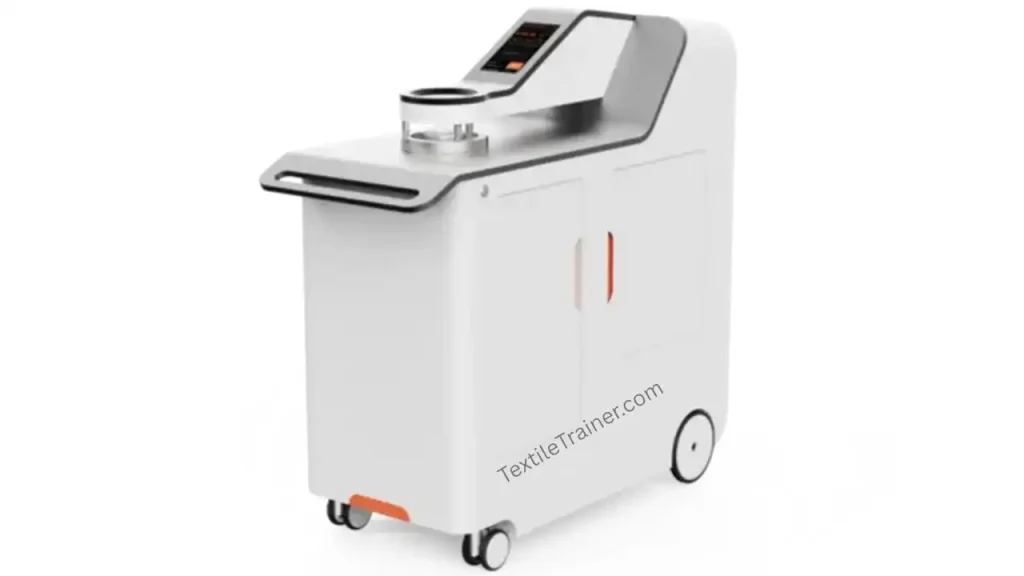
A lab may work with different standards so having a terser which can accommodate different methods can simplify lab operations. The AirFicient system allows operator to select the test standard and measurement units directly from the touchscreen and different test heads are also available for different testing requirements.
Why Can Results Differ Between Air Permeability Standards?
Different standards should not automatically be treated as interchangeable because they measure the same general property. The air permeability results totally depend on the test pressure, test area, specimen preparation, measurement specimen and calculation procedure, that is the main reason that changing the method or its required conditions can affect the reported value. This is why a testing lab should avoid comparing two numerical results without first checking:
- Is the same testing standard used?
- Is the same test pressure applied?
- Is the same test area used?
- Are the testing specimen prepared and conditioned in the same way?
- Are the same measurement units reported?
- Is the equipment operating correctly?
The correct questing is not “Which results is higher” but “were the results obtained under the comparable testing conditions?” How Does ChiuVention AirFicient Simplify Multi-Standard Testing? ChiuVention AirFicient is especially designed to simplify this process by allowing the operator to select standard and unit directly from the touchscreen. The system also supports different test heads and automatic operation.
| Features | Conventional Testing Procedure | ChiuVention AirFicient Procedure |
| Standard selection | Manual setup | Direct touchscreen selection |
| Test operation | More manual adjustments | Automatic |
| Pressure control | Manual/mechanical | Automated |
| Test-head selection | Manual | Automatic recognition |
| Measurement | Operator-dependent | Automated |
| Data recording | Manual | Digital |
| Reporting | Manual | Digital |
| Multiple standards | More setup effort | Multiple standards supported |
| Connectivity | Often offline | ERP/LIMS and APP connectivity |
For lab which handling large numbers of samples can reduce repetitive setup ad recording work and allow technician to focus on the preparation of testing specimen, abnormal-results investigation, process analysis and quality improvement.
Why Is the Right Standard Important for Textile Manufacturers?
Choosing the relevant air permeability testing standard ensures that the test results address the intended quality requirements. Choosing the right standard method depends on the material, application, and customer specification. The target market also determines which testing method should be used. Using an irrelevant or inconsistent method can make the testing results difficult to compare and may lead to unnecessary investigation.
Right material → Right standard → Right conditions → Reliable result → Correct production decision The role of textile testing lab is not just to produce an air permeability value but to provide a reliable, traceable and relevant results which supports quality and production decisions.
FAQs
- Can one air permeability tester perform multiple standards?
- Yes, if the instrument is designed and configured to support different testing methods. ChiuVention AirFicient lists supports GB/T 5453, ISO 9237, ISO 9073-15, JIS L1096, BS 3424-16, BS 6F 100and optional ASTM D737.
- Why are different test heads used for air permeability testing?
- Different testing head provides different test areas. AirFicient has a standard 20 cm2 test head and optional 5, 25, 38.3, 50 and 100 cm2 testing head which allowing the system to accommodate different testing requirements.
- What factors should a lab consider when selection an air permeability standard?
- The testing lab should consider the type of material, customer specification, target market, intended application, required test pressure, test area, applicable standard and reporting requirements.
- How does AirFicient improves air permeability testing?
- AirFicient provides automatic testing with controlled airflow and pressure, direct testing standard and unit selection, multiple test heads, digital data management and ERP/LIMS connectivity. These features reduce the repetitive manual operations and support more efficient lab workflow.
- Why is standard selection important when comparing two lab results?
- Two lab can get different testing values if they use different standards or test conditions. ASTM D737 specifically notes that when differences between lab have practical significance, comparative testing can be sued to investigate the potential lab bias.
- What is the benefit of using a multi-standard air permeability tester?
- A multi-standard system always allows a testing lab to test different materials and customer requirements using a single platform which reducing the need for separate equipment and simplifying standard selection, testing, data recording and reporting.
Conclusion
Air permeability testing standards helps to evaluate the same general property but scope, material, test conditions and customer requirements must be considered when selection a method.ISO 9237, ASTM D737, GB/T 5453, ISO 9073-15, JIS L1096 and BS testing standards provide different testing frameworks for textile and nonwoven testing applications.For lab, which handling multiple requirements, ChiuVention AirFicient support multiple standards, testing heads, units, automated airflow and pressure controls, digital reporting and ERP/LIMS connectivity.The goal is very simple, selecting the right testing method, control the test an obtain reliable results and make faster quality decisions.
Contact Us for a Free Demo or Consultation
For more information on textile testing methods, standards, and textile testing machines, contact us:
- WhatsApp: +86 180 2511 4082
- Tel: +86 769 2329 4842
- Fax: +86 769 2329 4860
- Email: sales@chiuvention.com
- LinkedIn: ChiuVention