
Dragon Fruit Dye: A Natural Dye for Cotton Knit Fabric
Introduction
Natural dyes have been used for dyeing of textile materials for many years. Dragon fruit dye is one of the sources of natural dye. Generally, natural dye is extracted from plants, fruits, leaves, roots, flowers and agricultural residues. However, this article focus on dragon fruit dye. Red pitahaya, scientifically known as Hylocereus polyrhizus, is a type of fruit popularly known as red dragon. The main coloring compounds in red dragon fruit are betalains. Betacyanins are the red to violet group of betalain pigments. This pigments are responsible dragon fruit dye.
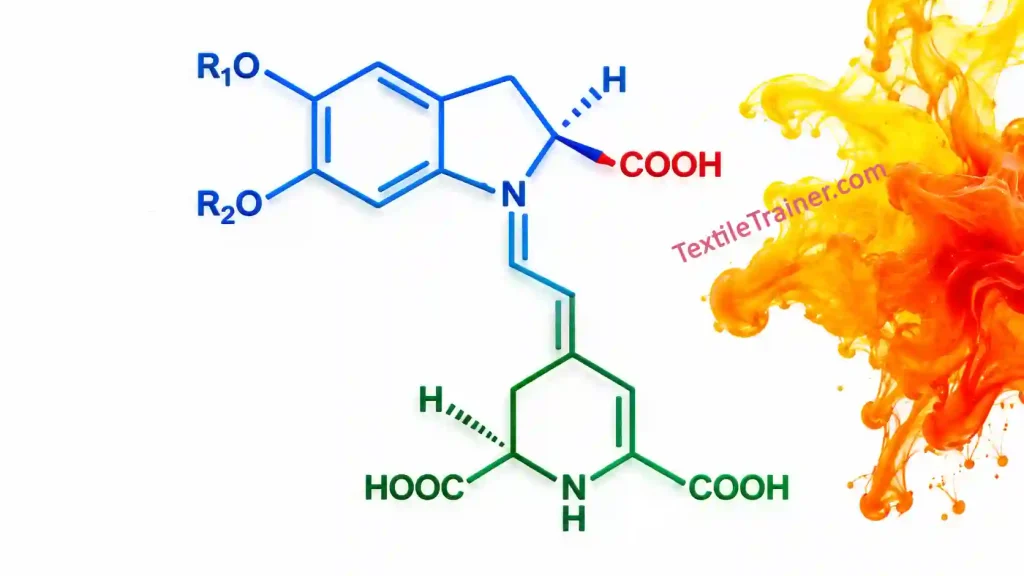
and R2 = H for Hylocerenin (Hylocereus polyrhizus). Reprinted with permission from [1]
But the natural dye gives different color in different mordant. On study shown that cotton fabric dyeing with dragon fruit peel and found baby pink shade. Not only the mordant but also processing conditions change the natural dye color. Example of processing condition : temperature, pH, and light.so, processing condition should be considered during natural dye extraction. However, this article described the cotton fabric dyeing process with natural dye extracted from dragon fruit.
Cotton Fabric Dyeing with Dragon Fruit Dye
This segment has been divided into three parts.
- Segment-1: Mordanting process
- Segment-2: Dye extraction process
- Segment-3: Dyeing process
Mordanting process
Natural dyes has no affinity to fabric. So, mordant is used to increase affinity to fabric. In this article, Potassium alum [KAl(SO4)2.12H2O] is used as mordant. The following the recipe of mordanting process:
| Fabric weight | 5 gm |
| Mordant (Potassium alum) | 1 gm (20% on the weight of fabric) |
| Temperature | 800 C |
| Time | 60 min |
| M:L | 1:40 |
According to the recipe, take 200 ml water in the dyeing pot and add Potassium alum. Then, fabric is put into the dyeing pot. Now, loaded the dyeing pot in the infrared dyeing machine and set time and temperature. Finally, press the run button of the machine. In the meantime, let’s move the next segment: natural dye extraction process
Dragon fruit dye extraction process
Dye extraction process is very simple. Initially, a dragon fruit is peel out and cut into small slice. Now, 200 gm of dragon fruit slice is taken and mixed with 200 ml water to produce dragon fruit dye. The next step, the mixture (dragon fruit + water) is put into a blender. Subsequently, blend it for about 5 minutes (at a time, run the blender for 10 secs, then rest little time) to extract the natural dye from the fruit. After blending, the mixture is filtered using clean cotton fabric to separate the natural dye solution from the solid particles. After filtration, the dye is ready for cotton fabric dyeing.
Meanwhile, the mordanting process has been completed. Now, the dyeing pot is unloaded from the dyeing machine. Remember, don’t wash the mordanted sample with water. Mordanted fabric is just squeezed to remove the extra water.
Dyeing process with dragon fruit dye
Initially, 200 ml dragon fruit dye is taken into the dyeing pot. Now, mordanted fabric is added into the dye solution. Then, the dyeing pot is loaded into the infrared dyeing machine. The next step, cotton fabric dyeing parameters are set at 600 c for 60 min and run the machine. After 60 minutes, unload the dyeing pot from the machine. Take out the dyed fabric and wash it properly. Finally, dry the fabric.
Dragon fruit dyed sample
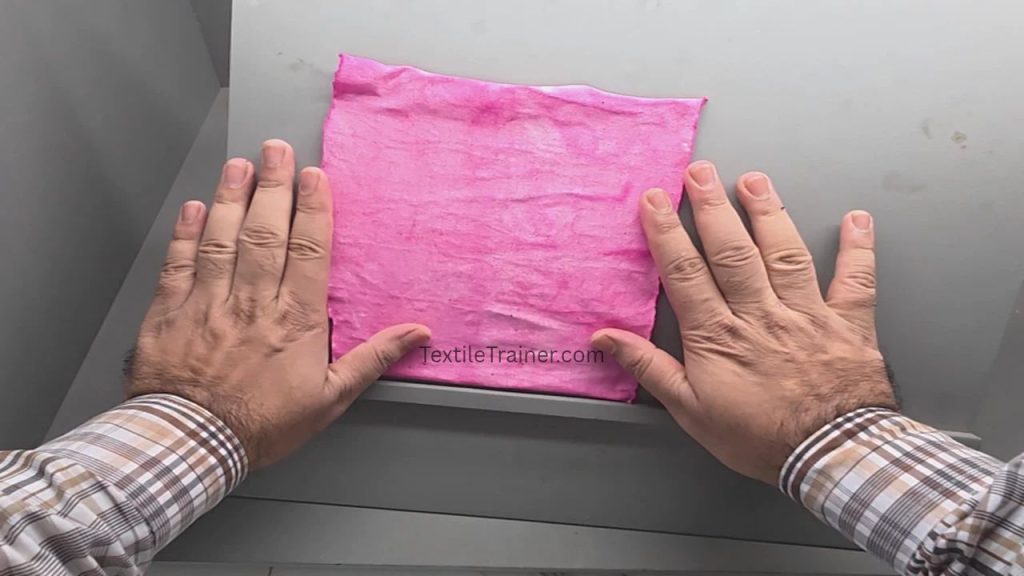
Fabric Printing with Dragon Fruit Dye
Following the recipe for making printing paste using dragon fruit dye.
| Natural dye (dragon fruit dye) | 100 ml |
| Urea | 1 gm |
| Binder | 1 ml |
| Sodium Alginate (Thickener) | Approximately 2 gm (but it is depend on viscosity) |
- Initially, 1 gm urea, 1 ml binder take in a beaker.
- The next step, 100 ml natural dye solution extracted from dragon fruit is taken into the beaker and mixed it with glass rod.
- Subsequently, binder is added to the solution and continues the stir the solution. Amount of binder depends on viscosity. Now, paste is ready for printing fabric.
- Here, screen printing and block printing are done with natural dye.
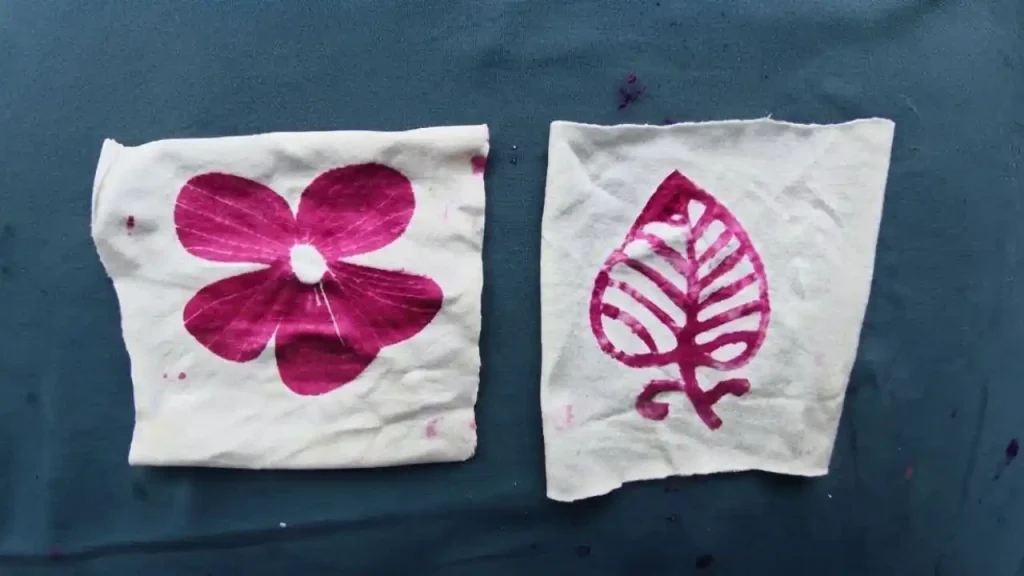
Conclusion
Finally, we can say that this dye should not be considered a direct replacement for synthetic dye. Because, we didn’t get uniform shade from these types of natural dye. Though, some natural dye like turmeric, madder, weld, eucalyptus, cochineal and logwood show good colorfastness properties. The dye extraction process is lengthy. However, dragon fruit dye may give better color. You can try use another mordant, and give me feedback.
Reference
- Choo, W.S. Betalains: Application in Functional Foods. In Reference Series in Phytochemistry; Springer: Cham, Switzerland, 2019; pp. 1471–1498.
- H. Mahmud, T. Raihan, T. Z. Shakhik, and F. T. Khan, “Dragon Fruit ( Hylocereus polyrhizus ): A Green Colorant for Cotton Fabric,” pp. 230–244, 2023.
- M. M. K. M, M. D. V, M. K. P. K, M. R. K. K, M. S. T. S, and E. J. Jesy, “Natural Dyes from Canonball Tree and Dragon Fruit : A Sustainable Solution for Textiles,” pp. 3165–3168, 2025.
More Natural Dyeing Process


